Artists like Charles Wright & The Watts 103rd Street Rhythm Band
Kindred artists that sit next to Charles Wright & The Watts 103rd Street Rhythm Band on the star chart — same era, adjacent sound, or overlapping influence. Tap any card to open its full page.
 Arthur Conleyartist
Arthur Lee Conley, also known in later years as Lee Roberts, was an American soul singer, best known for the 1967 hit "Sweet Soul Music".
 The J.B.'sartist
The J.B.'s was James Brown's band from 1970 through the early 1980s. On records, the band was sometimes billed under alternate names such as Fred Wesley and the JBs, The James Brown Soul Train, Maceo and the Macks, A.A.B.B., Fred Wesley and the New JBs, The First Family, and The Last Word. In addition to backing Brown, the J.B.'s played behind Bobby Byrd, Lyn Collins, and other singers associated with the James Brown Revue, and performed and recorded as a self-contained group. In 2015, they were nominated for induction into the Rock and Roll Hall of Fame but failed to be inducted and can be considered for Musical Excellence in the future. They have been eligible since 1995.
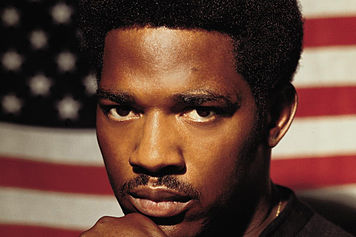 Edwin Starrartist
Charles Edwin Hatcher, known by his stage name Edwin Starr, was an American singer and songwriter. He is best remembered for his Norman Whitfield-produced Motown singles of the 1970s, most notably the number-one hit "War".
 Ohio Playersartist
 Lyn Collinsartist
Gloria Lavern Collins, better known as Lyn Collins, was an American soul singer best known for working with James Brown in the 1970s and for the influential 1972 funk single, "Think ".
 King Floydartist
King Floyd was a New Orleans soul singer, best known for his top 10 hit from 1970, "Groove Me".
 Maceo & The Macksartist
Maceo Parker is an American funk and soul jazz saxophonist, best known for his work with James Brown in the 1960s, Parliament-Funkadelic in the 1970s and Prince in the 2000s. Parker was a prominent soloist on many of Brown's hit recordings, and a key part of his band, playing alto, tenor and baritone saxophones. Since the early 1990s, he has toured under his own name.
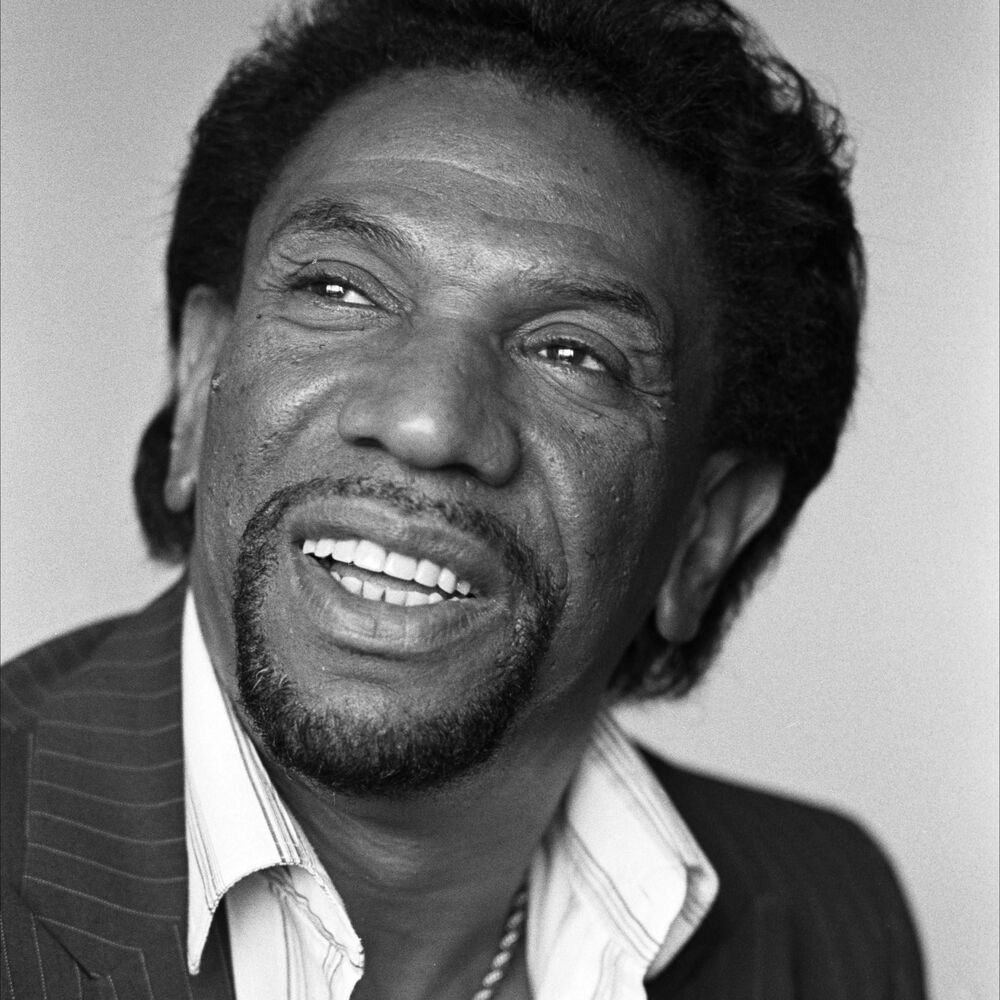 Bobby Byrdartist
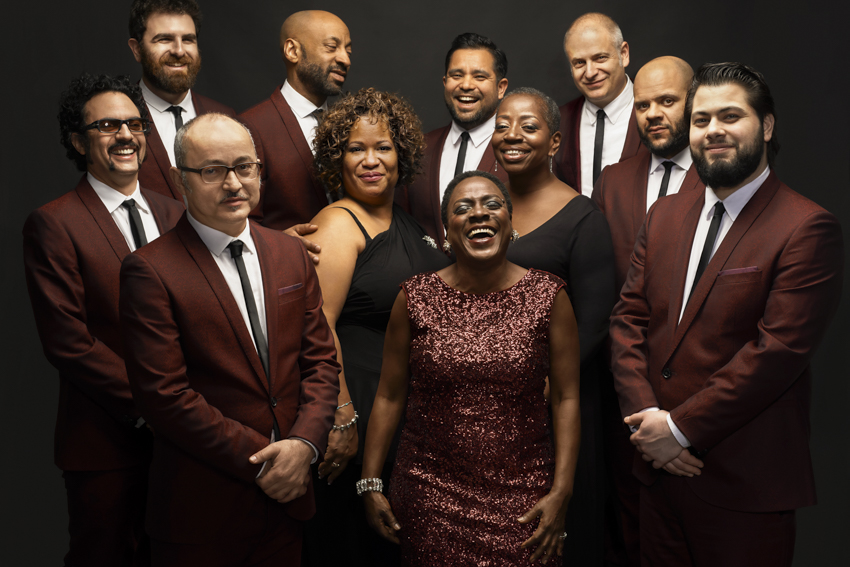 Sharon Jones and the Dap-Kingsartist
Sharon Jones & the Dap-Kings were an American funk and soul band signed to Daptone Records. They were part of a revival movement of mid-1960s to mid-1970s style funk and soul music. They released their debut album Dap Dippin' in 2002, the first of seven studio albums. Their 2014 album Give the People What They Want was nominated for the Grammy Award for Best R&B Album. After Sharon Jones' death in 2016, the band released the posthumous album Soul of a Woman in 2017 and a compilation of cover songs in 2020.
 Fatback Bandartist
 The Bar-Kaysartist
The Bar-Kays is an American funk band formed in 1964. The band had dozens of charting singles from the 1960s to the 1980s, including "Soul Finger" in 1967, "Son of Shaft" in 1972, and "Boogie Body Land" in 1980. The Bar-Kays also served as the backing band for a variety of singers, including Isaac Hayes and Otis Redding.
 O.V. Wrightartist
Overton Vertis Wright was an American singer who is generally regarded as a blues artist by African-American fans in the Deep South; he is also regarded as one of Southern soul's most authoritative and individual artists. His best known songs include "That's How Strong My Love Is" (1964), "You're Gonna Make Me Cry" (1965), "Nucleus of Soul" (1968), "A Nickel and a Nail" (1971), "I Can't Take It" (1971) and "Ace of Spades" (1971).
 The Poets of Rhythmartist
 The Chi-Litesartist
The Chi-Lites is an American R&B/soul vocal quartet from Chicago. Forming at Chicago's Hyde Park High School in 1959, the group's original lineup consisted of singers Robert Lester, Eugene Record, Creadel Jones, Clarence Johnson, Burt Bowen, Eddie Reed and Marshall Thompson.
 Jr. Walker & The All Starsartist
Autry DeWalt Mixon Jr., known professionally as Junior Walker, was an American multi-instrumentalist and vocalist who recorded for Motown during the 1960s. He also performed as a session and live-performing saxophonist with the band Foreigner during the 1980s.
 Average White Bandartist
The Average White Band were a Scottish funk and R&B band that had a series of soul and disco hits between 1974 and 1980. They were best known for their million-selling instrumental track "Pick Up the Pieces", and their albums AWB and Cut the Cake. The band name was initially proposed by Bonnie Bramlett. They have influenced others, such as the Brand New Heavies, and been sampled by various musicians, including the Beastie Boys, Public Enemy, TLC, the Beatnuts, Too Short, Ice Cube, Eric B. & Rakim, Nas, A Tribe Called Quest, Christina Milian, and Arrested Development, making them the 15th most sampled act in history.
 Betty Davisartist
 Donny Hathawayartist
Donny Edward Hathaway was an American soul singer, keyboardist, songwriter, backing vocalist, and arranger who Rolling Stone described as a "soul legend". His most popular songs include "The Ghetto", "This Christmas", "Someday We'll All Be Free", and "Little Ghetto Boy". Hathaway is also renowned for his renditions of "A Song for You", "For All We Know", "Jealous Guy" and "I Love You More Than You'll Ever Know", along with "Where Is the Love" and "The Closer I Get to You", two of many collaborations with Roberta Flack. He has been inducted into the St. Louis Walk of Fame and won one Grammy Award from four nominations. Hathaway was also posthumously honored with a Grammy Lifetime Achievement Award in 2019. Dutch director David Kleijwegt made a documentary called Mister Soul – A Story About Donny Hathaway, which premiered at the International Film Festival Rotterdam on January 28, 2020.
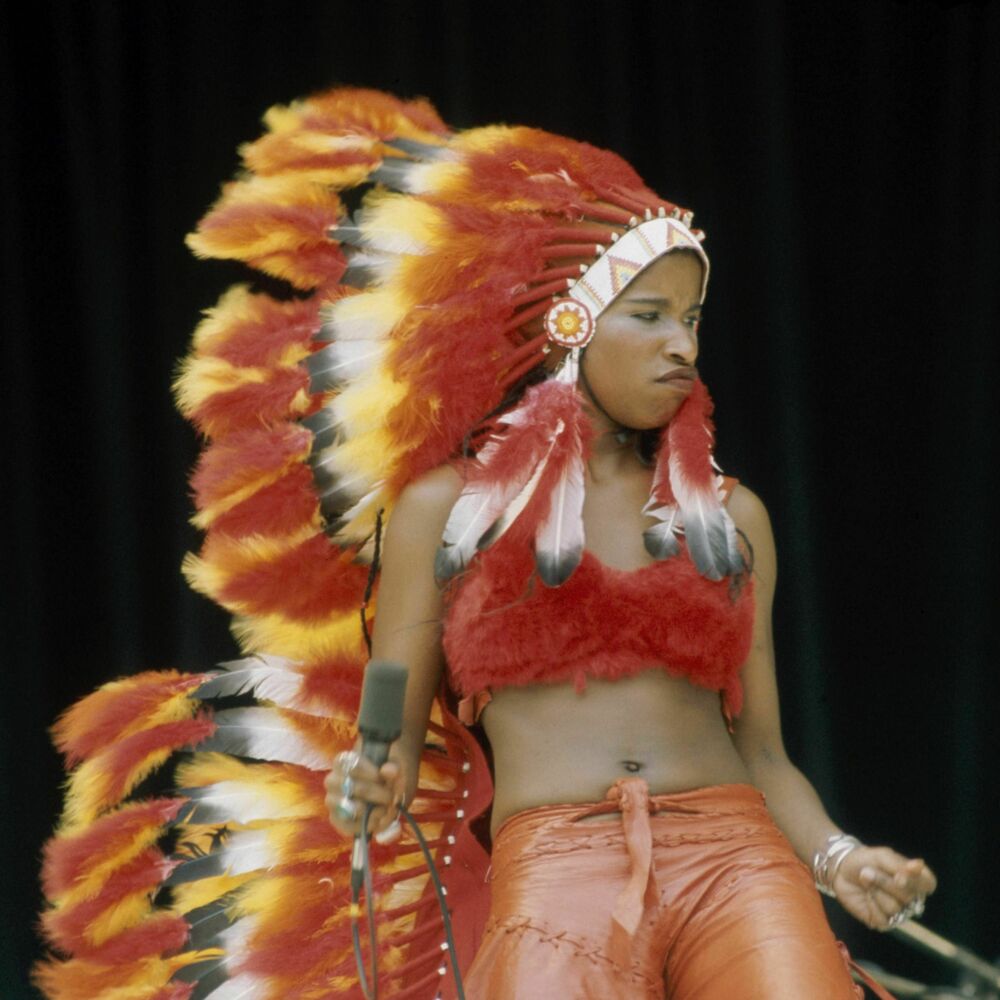 Rufusartist
 Baby Hueyartist
 Charles Wrightartist
Charles Williams Wright is an American singer, instrumentalist and songwriter. He has been a member of various doo wop groups in the late 1950s and early 1960s as well as a solo artist in his own right. He is also the former leader and writer of hits for the group Watts 103rd Street Rhythm Band.
 Graham Central Stationartist
Graham Central Station was an American funk band named after founder Larry Graham. The name is a pun on New York City's Grand Central Terminal, often colloquially called Grand Central Station.
 Incredible Bongo Bandartist
 Roy Ayers Ubiquityartist
Roy Edward Ayers Jr. was an American vibraphonist, record producer, and composer. Ayers began his career as a post-bop jazz artist, releasing several studio albums with Atlantic Records, before his tenure at Polydor Records beginning in the 1970s, during which he helped to pioneer jazz-funk. He was a key figure in the acid jazz movement, and has been described as "The Godfather of Neo Soul". He was best known for his compositions "Everybody Loves the Sunshine", "Running Away", and "Freaky Deaky" and others that charted in the 1970s. At one time, Ayers was listed among the performers whose music was most often sampled by rappers.