Artists like Oumou Sangaré
Kindred artists that sit next to Oumou Sangaré on the star chart — same era, adjacent sound, or overlapping influence. Tap any card to open its full page.
 Toumani Diabatéartist
 Amadou & Mariamartist
 Cheikh Lôartist
 Orchestra Baobabartist
Orchestra Baobab is a Senegalese band established in 1970 as the house band of the Baobab Club in Dakar. Many of the band's original members had previously played with Star Band de Dakar in the 1960s. Directed by timbalero and vocalist Balla Sidibé, the group featured saxophonists Issa Cissoko and Thierno Koité, two singers, two guitarists and a rhythm section with drums, congas and bass guitar. Since their formation, the band has predominantly played a mix of son cubano, Wolof music, and to a lesser extent Mande musical traditions. Following the deaths of Cissoko in 2019 and Sidibé in 2020, Thierno Koité has become the leader of the band.
 Vieux Farka Touréartist
 Baaba Maalartist
Baaba Maal is a Senegalese singer and guitarist born in Podor, on the Senegal River. In addition to acoustic guitar, he also plays percussion. He has released several albums, both for independent and major labels. In July 2003, he was made a UNDP Youth Emissary.
 Tiken Jah Fakolyartist
 Victor Déméartist
 Songhoy Bluesartist
Songhoy Blues is a desert blues music group from Timbuktu, Mali. The band was formed in Bamako after being forced to leave their homes during the civil conflict and the imposition of Sharia law. The band released its debut album, Music in Exile, via Transgressive Records on February 23, 2015, while Julian Casablancas' Cult Records partnered with Atlantic Records to release the album in North America in March 2015. The group is one of the principal subjects of the documentary film They Will Have To Kill Us First.
 Bembeya Jazz Nationalartist
 Geoffrey Oryemaartist
 Samba Touréartist
Samba Touré is a Malian singer and guitarist. He has released numerous albums, many of which have been internally renown. He has also toured across Africa, the United States and Europe several times. Touré has been repeatedly described as "anti-Griot" for the ways he breaks away from West African musical traditions.
 Papa Wembaartist
Jules Shungu Wembadio Pene Kikumba, known professionally as Papa Wemba, was a Congolese singer, songwriter, bandleader, actor, and cultural icon. Widely hailed as the "King of Rumba", he is regarded as one of the most influential African musicians. Across a career spanning nearly five decades, he propelled Congolese rumba onto the world stage, and helped globalize African popular music. Through his voice, performance style, and fashion, he shaped the sound and image of contemporary Congolese culture, becoming a central figure in the rise of La SAPE, the flamboyant movement of elegance and style. Wemba is often considered one of the greatest African vocalists and performers of all time.
 Manu Dibangoartist
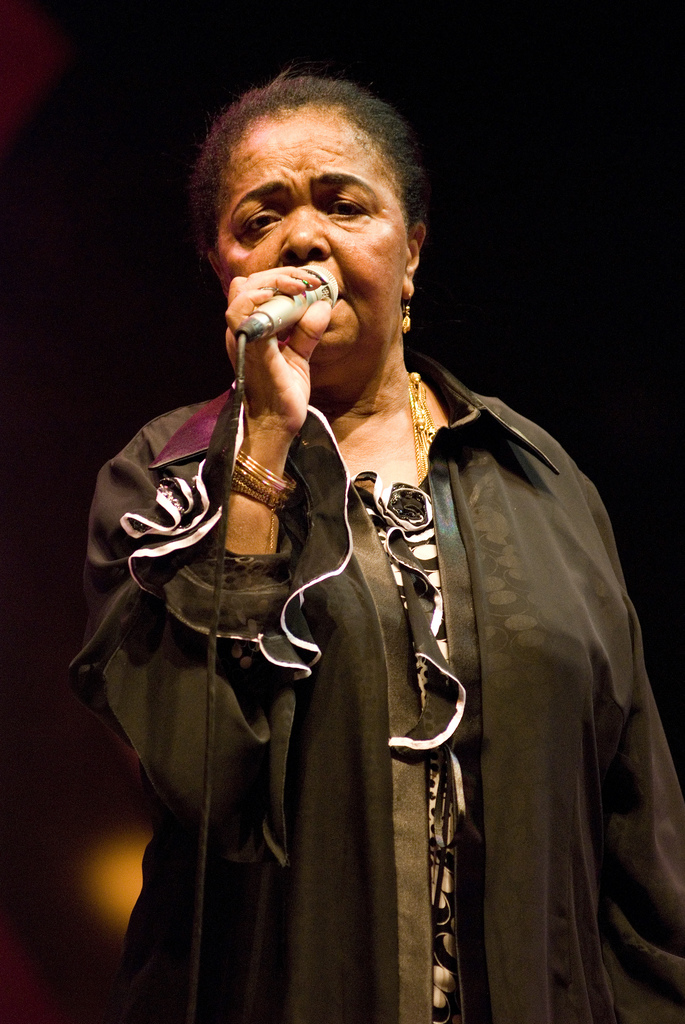 Cesária Évoraartist
Cesária Évora GCIH was a Cape Verdean singer known for singing morna, a genre of music from Cape Verde, in her native Cape Verdean Creole. Her songs were often devoted to themes of love, homesickness, nostalgia, and the history of the Cape Verdean people. She was known for performing barefoot and for her habit of smoking and drinking on stage during intermissions. Évora's music received many accolades, including a Grammy Award in 2004, and it has influenced many Cape Verde diaspora musicians as well as American pop singer Madonna. Évora is also known as Cize, the Barefoot Diva, and the Queen of Morna.