Artists like Youssou N’Dour
Kindred artists that sit next to Youssou N’Dour on the star chart — same era, adjacent sound, or overlapping influence. Tap any card to open its full page.
 Orchestra Baobabartist
Orchestra Baobab is a Senegalese band established in 1970 as the house band of the Baobab Club in Dakar. Many of the band's original members had previously played with Star Band de Dakar in the 1960s. Directed by timbalero and vocalist Balla Sidibé, the group featured saxophonists Issa Cissoko and Thierno Koité, two singers, two guitarists and a rhythm section with drums, congas and bass guitar. Since their formation, the band has predominantly played a mix of son cubano, Wolof music, and to a lesser extent Mande musical traditions. Following the deaths of Cissoko in 2019 and Sidibé in 2020, Thierno Koité has become the leader of the band.
 Baaba Maalartist
Baaba Maal is a Senegalese singer and guitarist born in Podor, on the Senegal River. In addition to acoustic guitar, he also plays percussion. He has released several albums, both for independent and major labels. In July 2003, he was made a UNDP Youth Emissary.
 Amadou & Mariamartist
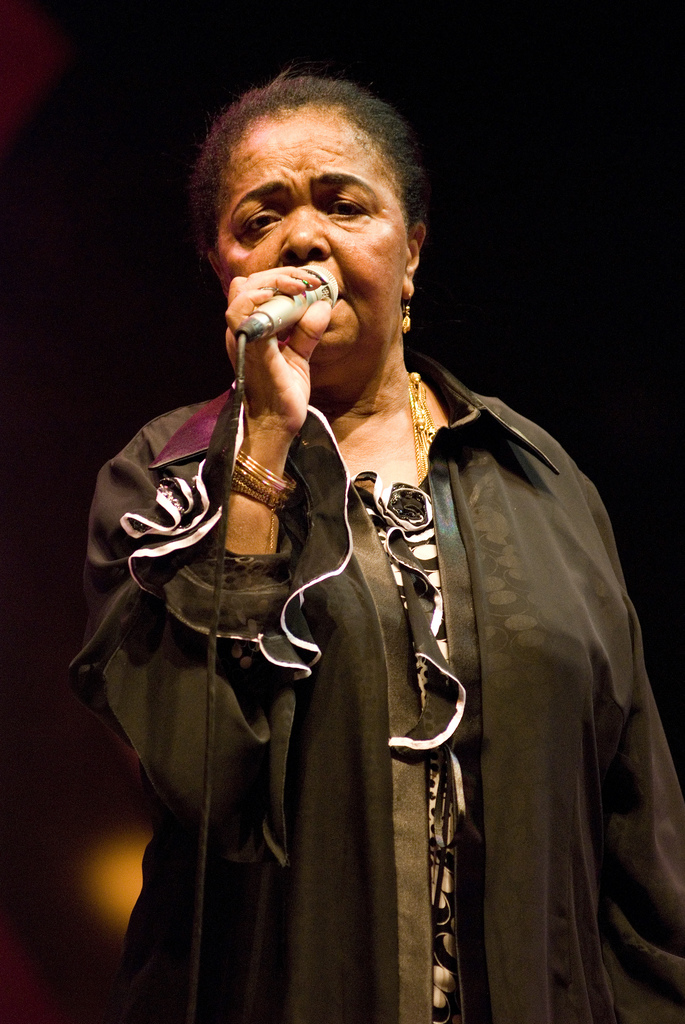 Cesária Évoraartist
Cesária Évora GCIH was a Cape Verdean singer known for singing morna, a genre of music from Cape Verde, in her native Cape Verdean Creole. Her songs were often devoted to themes of love, homesickness, nostalgia, and the history of the Cape Verdean people. She was known for performing barefoot and for her habit of smoking and drinking on stage during intermissions. Évora's music received many accolades, including a Grammy Award in 2004, and it has influenced many Cape Verde diaspora musicians as well as American pop singer Madonna. Évora is also known as Cize, the Barefoot Diva, and the Queen of Morna.
 Cheikh Lôartist
 Tinariwenartist
 Toumani Diabatéartist
 Vieux Farka Touréartist
 Les Négresses Vertesartist
Les Négresses Vertes, formed in 1987, is a French music group that combines world music and some aspects of alternative rock. Tracks often feature acoustic guitar and accordion, with some containing other traditional instruments such as piano and brass.
 Zap Mamaartist
 Africandoartist
 Papa Wembaartist
Jules Shungu Wembadio Pene Kikumba, known professionally as Papa Wemba, was a Congolese singer, songwriter, bandleader, actor, and cultural icon. Widely hailed as the "King of Rumba", he is regarded as one of the most influential African musicians. Across a career spanning nearly five decades, he propelled Congolese rumba onto the world stage, and helped globalize African popular music. Through his voice, performance style, and fashion, he shaped the sound and image of contemporary Congolese culture, becoming a central figure in the rise of La SAPE, the flamboyant movement of elegance and style. Wemba is often considered one of the greatest African vocalists and performers of all time.
 Azam Aliartist
Azam Ali is an Iranian musician. She has released music as a solo artist as well as with the bands VAS, Roseland, and Niyaz.
 The Very Bestartist
The Very Best is a collaboration between London-based DJ and production duo Radioclit and Esau Mwamwaya, a singer from Lilongwe, Malawi. Their music has been described as an Afro-Western mix of dance, hip hop, pop, and the traditional music of Malawi.
 Putumayoartist
 Niyazartist
 Tabu Ley Rochereauartist
Pascal-Emmanuel Sinamoyi Tabu, better known as Tabu Ley Rochereau, was a Congolese rumba singer and musician. He was the leader of Orchestre Afrisa International, as well as one of Africa's most influential vocalists and prolific songwriters. Along with guitarist Dr Nico Kasanda, Tabu Ley pioneered African rumba and internationalised his music by fusing elements of Congolese folk music with Cuban, Caribbean and Latin American rumba. He has been described as "the Congolese personality who, along with Mobutu, marked Africa's 20th century history", and is credited with composing over 3,000 songs and selling thousands of records.
 Luraartist
Lura is a Portuguese singer and musician, of Cape Verdean descent. Her compositions are based on traditional Cape-Verdean music as for example the Morna, Funaná and Batuque, and influenced by African and contemporary Western music.