Roots of Steve Jones
The artists and genres Steve Jones came out of — one hop back on the influence tree.
 Iggy Popartist
 Cheap Trickartist
 Bob Dylanartist
 Thin Lizzyartist
Thin Lizzy were an Irish rock band formed in Dublin in 1969. The band initially consisted of bass guitarist, lead vocalist, and principal songwriter Phil Lynott, drummer Brian Downey, guitarist Eric Bell, and organist Eric Wrixon, although Wrixon left after a few months. Bell left at the end of 1973 and was briefly replaced by Gary Moore, who himself was replaced in mid-1974 by dual lead guitarists: Scott Gorham, who remained with the band until their break-up in 1983, and Brian Robertson, who remained with the band until 1978 when Moore re-joined. Moore left a second time and was replaced by Snowy White in 1980, who was himself replaced by John Sykes in 1982. The line-up was augmented by keyboardist Darren Wharton in 1980.
 Guns N' Rosesartist
Guns N' Roses is an American hard rock band formed in Los Angeles, California, in 1985 from L.A. Guns and Hollywood Rose. After signing with Geffen Records in 1986, the band's "classic" lineup featured vocalist Axl Rose, lead guitarist Slash, rhythm guitarist Izzy Stradlin, bassist Duff McKagan, and drummer Steven Adler.
 Duran Duranartist
 Mike Muirartist
 David Bowieartist
 The Clashartist
 Siouxsie and the Bansheesartist
Siouxsie and the Banshees were a British rock band formed in London in 1976 by vocalist Siouxsie Sioux and bassist Steven Severin. The Times called them "one of the most audacious and uncompromising musical adventurers of the post-punk era".
 Billy Idolartist
 Joan Jettartist
 Adam Antartist
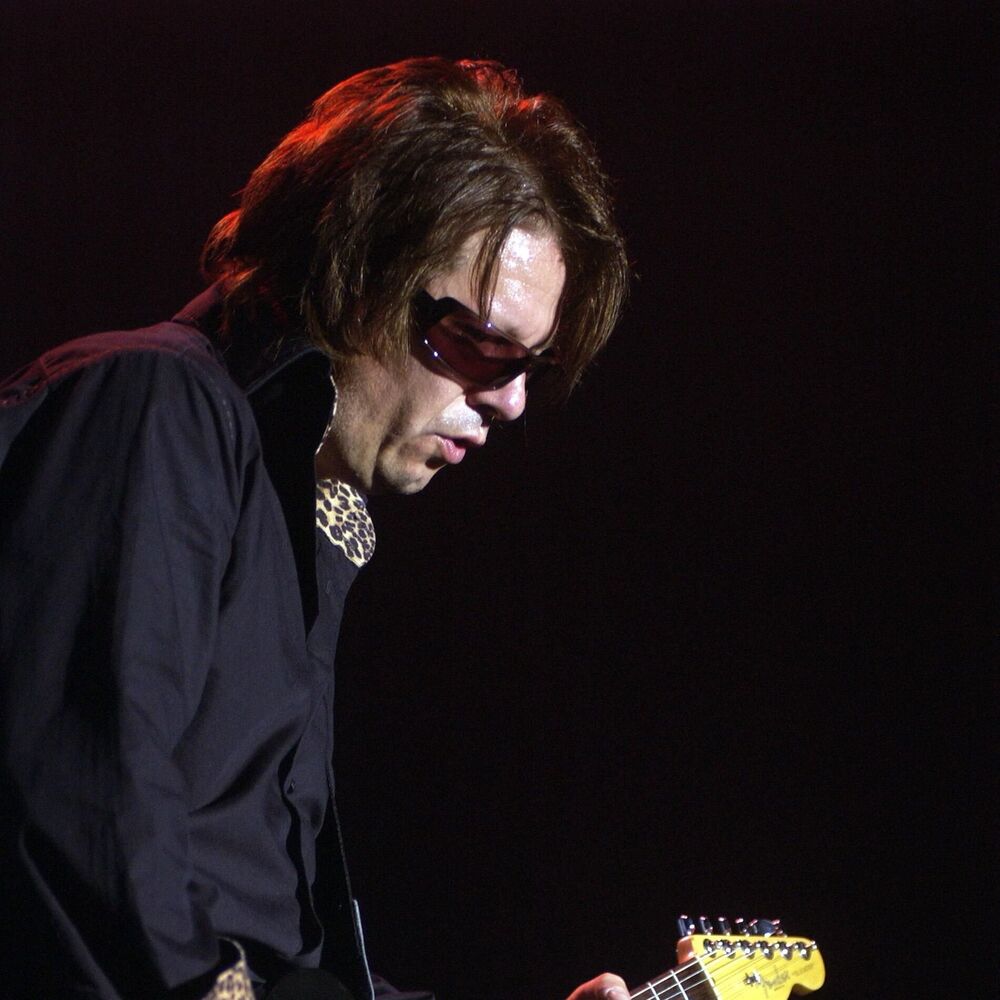 Andy Taylorartist
 Megadethartist
Megadeth is an American heavy metal band formed in Los Angeles in 1983 by vocalist and guitarist Dave Mustaine. Known for their technically complex guitar work and musicianship, Megadeth is one of the "big four" of American thrash metal—along with Slayer, Anthrax, and Metallica—and is credited with helping to develop and popularize the genre. Their music features intricate arrangements, fast rhythm sections, dual lead guitars, and lyrical themes such as war, conflicts, politics, religion, death, and personal relationships.
 Ian Brownartist
 Prince Busterartist