Artists like The Five Satins
Kindred artists that sit next to The Five Satins on the star chart — same era, adjacent sound, or overlapping influence. Tap any card to open its full page.
 The Driftersartist
 Bruce Channelartist
Bruce Channel is an American singer-songwriter best known for his 1962 number-one hit record "Hey! Baby".
 Ritchie Valensartist
Richard Steven Valenzuela, better known by his stage name Ritchie Valens, was an American guitarist, singer, and songwriter. A rock and roll pioneer and a forefather of the Chicano rock movement, Valens died in a plane crash just eight months after his breakthrough.
 The Flamingosartist
The Flamingos are an American doo-wop group formed in Chicago in 1953. The band became popular in mid-to-late 1950s and are best known for their 1959 cover version of "I Only Have Eyes for You". They have since been hailed as being one of the finest and most influential vocal groups in pop and doo wop music history. In 2001, the band was inducted into the Rock and Roll Hall of Fame.
 Little Anthony & the Imperialsartist
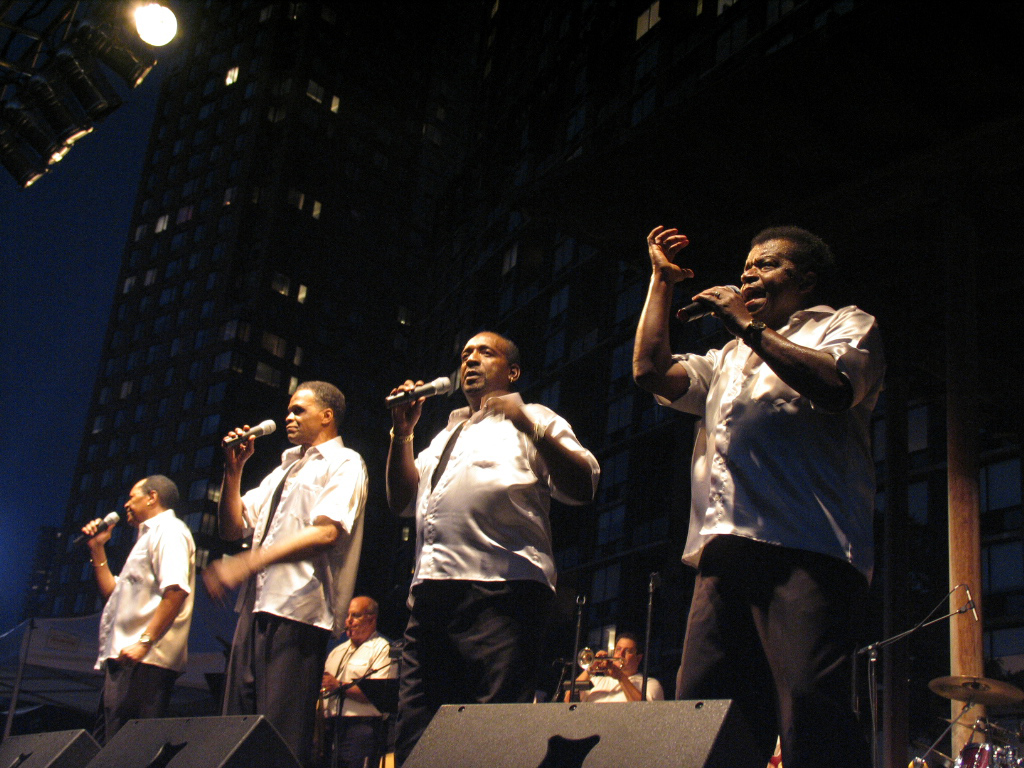
Little Anthony and the Imperials is an American rhythm and blues, doo-wop, and soul vocal group from New York City founded by Clarence Collins in the 1950s and named in part for its lead singer, Jerome Anthony "Little Anthony" Gourdine, who was noted for his high-pitched voice. In addition to Collins and Gourdine, the original Imperials included Ernest Wright, Glouster "Nate" Rogers, and Tracy Lord, the last two of whom were subsequently replaced by Sammy Strain.
 The Fleetwoodsartist
 Brenton Woodartist
 Frankie Valli & the Four Seasonsartist
The Four Seasons were an American rock band formed in 1960 in Newark, New Jersey. Since 1970, they have also been known at times as Frankie Valli and the Four Seasons. They are one of the best-selling musical groups of all time, having sold an estimated 100 million records worldwide.
 The Contoursartist
The Contours are an American rhythm and blues vocal group. They recorded for Motown Records. They are known for their 1962 hit single "Do You Love Me", which sold over 1 million copies and became a major hit again in 1988.
 Frankie Lymonartist
Franklin Joseph Lymon was an American rock and roll/rhythm and blues singer and songwriter, dancer and composer best known as the boy soprano lead singer of the New York City-based early rock and roll doo-wop group the Teenagers. The group was composed of five boys, all in their early to mid-teens. The original lineup of the Teenagers, an integrated group, included three African-American members, Lymon, Jimmy Merchant, and Sherman Garnes; and two Puerto Rican members, Joe Negroni and Herman Santiago. The Teenagers' first single, 1956's "Why Do Fools Fall in Love", was also their biggest hit. After Lymon went solo in mid-1957, both his career and that of the Teenagers fell into decline. In 1968, Lymon was found dead at age 25 from a heroin overdose. He was posthumously inducted into the Rock and Roll Hall of Fame in 1993 as a member of the Teenagers. Lymon's life was dramatized in the 1998 film Why Do Fools Fall in Love.
 Dionartist
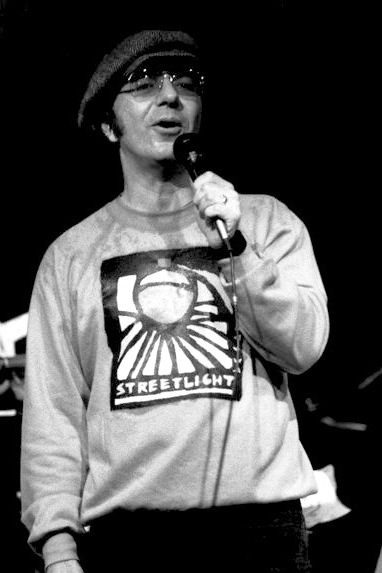
Dion Francis DiMucci, better known mononymously as Dion, is an American singer and songwriter. His music incorporates elements of doo-wop, pop, rock, R&B, folk and blues. Initially the lead singer of the vocal group Dion and the Belmonts, Dion embarked on a solo career, and was one of the most prominent rock and roll performers of the pre-British Invasion era. He had 39 Top 40 hits in the late 1950s and early 1960s as a solo performer, or with the Belmonts and the Del-Satins. He is best remembered for his signature hit songs "Runaround Sue", "The Wanderer", "Ruby Baby" and "Lovers Who Wander", among others.
 Bobby Darinartist
 The Righteous Brothersartist
The Righteous Brothers are an American musical duo originally formed by Bill Medley and Bobby Hatfield but now comprising Medley and Bucky Heard. Medley formed the group with Hatfield in 1963. They had first performed together in 1962 in the Los Angeles area as part of a five-member group called the Paramours, and adopted the name the Righteous Brothers when they became a duo. Their most active recording period was in the 1960s and '70s, and, after several years inactive as a duo, Hatfield and Medley reunited in 1981 and continued to perform until Hatfield's death in 2003. The term "blue-eyed soul" is thought to have been coined by Philadelphia radio DJ Georgie Woods in 1964 when describing the duo's music.