Roots of Diana Ross and the Supremes
The artists and genres Diana Ross and the Supremes came out of — one hop back on the influence tree.
 Ray Charlesartist
 The Driftersartist
 Brenda Hollowayartist
Brenda Holloway is an American soul singer who was a recording artist for Motown Records during the 1960s. Her best-known recordings are the hits "Every Little Bit Hurts", "When I'm Gone", and "You've Made Me So Very Happy". The latter, which she co-wrote, was later widely popularized when it became a Top Ten hit for Blood, Sweat & Tears. She left Motown after four years, at the age of 22, and largely retired from the music industry until the 1990s, after her recordings had become popular on the British "Northern soul" scene.
 R. Dean Taylorartist
Richard Dean Taylor was a Canadian musician, most notable as a singer, songwriter, and record producer for Motown during the 1960s and 1970s. According to Jason Ankeny, Taylor was "one of the most underrated acts ever to record under the Motown aegis."
 The Ebonysartist
Kenneth Gamble and Leon A. Huff are an American songwriting and production duo credited for developing the Philadelphia soul music genre of the 1970s. In addition to forming their own label, Philadelphia International Records, Gamble and Huff have written and produced 175 gold and platinum records, earning them an induction into the Rock and Roll Hall of Fame in the non-performer category in March 2008.
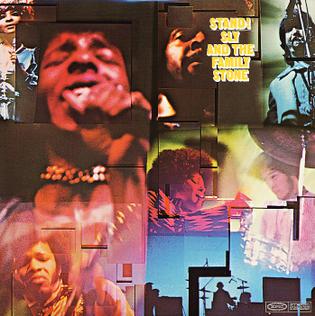 Stand!artist
Stand! is the fourth album by American soul-funk band Sly and the Family Stone, released on May 3, 1969. Written and produced by lead singer and multi-instrumentalist Sly Stone, Stand! is considered an artistic high-point of the band's career. Released by Epic Records, just before the group's celebrated performance at the Woodstock festival, it became the band's most commercially successful album to date. It includes several well-known songs, among them hit singles, such as "Sing a Simple Song", "I Want to Take You Higher", "Stand!", and "Everyday People". The album was reissued in 1987 on compact disc and vinyl, and again in 2007 as a remastered numbered edition digipack CD with bonus tracks and, in the UK, as only a CD with bonus tracks.