Roots of Pussy Riot
The artists and genres Pussy Riot came out of — one hop back on the influence tree.
 Pinkshiftartist
Pinkshift is an American rock band, consisting since 2022 of lead vocalist Ashrita Kumar, guitarist Paul Vallejo, and drummer Myron Houngbedji. The band formed in Baltimore, Maryland in 2019, after the three members met at Johns Hopkins University and began writing music. Their music has been described as pop-punk with "elements of grunge and alt rock", with the band having cited Nirvana, Arctic Monkeys, and No Doubt as musical influences.
 PMMPartist
PMMP is a Finnish pop rock band fronted by singers Paula Vesala and Mira Luoti and backed by musicians Mikko Virta, Juho Vehmanen and Heikki Kytölä. The name of the band is often said to be an abbreviation of the sentence "Paulan ja Miran Molemmat Puolet", which can be translated in English as "Both Sides of Paula and Mira". However, in an interview on the Finnish talk show Krisse Show, they stated that the name of the band comes, like ABBA, from the names of 4 of its members: so PMMP is Paula, Mira, Mira, Paula. PMMP's albums were produced by former Thergothon drummer Jori Sjöroos, who also wrote the music for all the songs. The lyrics are written by Paula and Mira. The band is an acclaimed live act.
 Angelic Upstartsartist
 Cockney Rejectsartist
 Sham 69artist
 Bikini Killartist
Bikini Kill is an American punk rock band formed in Olympia, Washington, in October 1990. The group originally consisted of singer and songwriter Kathleen Hanna, guitarist Billy Karren, bassist Kathi Wilcox, and drummer Tobi Vail. The band pioneered the riot grrrl movement with feminist lyrics and fiery performances. Their music is characteristically abrasive and hardcore-influenced.
 Dorian Electraartist
 Le Tigreartist
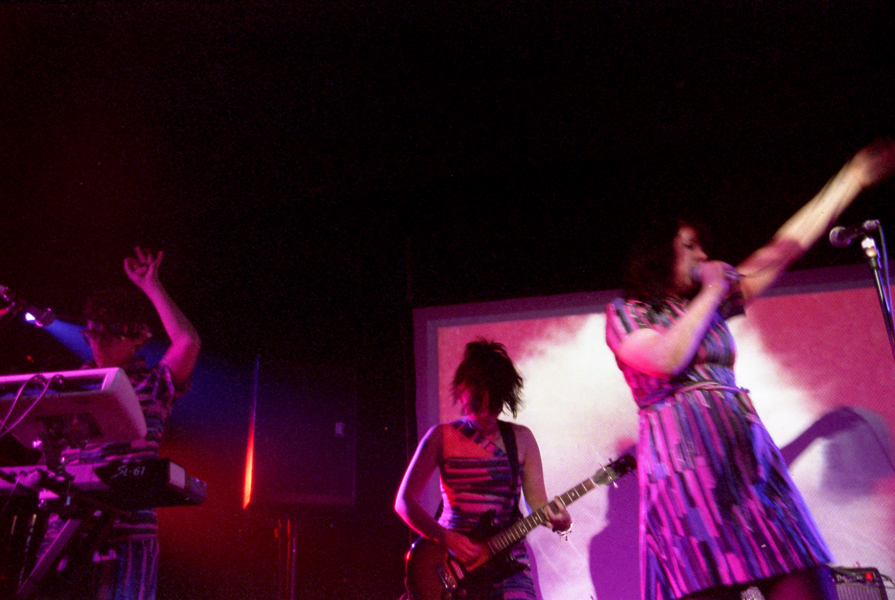
Le Tigre is an American art punk and riot grrrl band formed by Kathleen Hanna, Johanna Fateman and Sadie Benning in 1998 in New York City. Benning left in 2000 and was replaced by JD Samson. They mixed punk's directness and politics with playful samples, eclectic pop, and lo-fi electronics. Like with many bands in and from the riot grrrl movement, many of the lyrics addressed feminist themes and ideas. The group also added multimedia and performance art elements to their live shows, which often featured support from like-minded acts such as the Need.