Artists like Rogério Skylab
Kindred artists that sit next to Rogério Skylab on the star chart — same era, adjacent sound, or overlapping influence. Tap any card to open its full page.
 Sérgio Sampaioartist
Sérgio Moraes Sampaio was a Brazilian singer and songwriter. His compositions span several musical genres from samba and choro to rock and roll, blues and ballads.
 Arnaldo Baptistaartist
 Os Mutantesartist
Os Mutantes is a Brazilian rock band that were linked with the Tropicália movement of the late 1960s. Heavily influenced by Anglo-American psychedelic pop, they bridged Brazilian sensibilities together with studio trickery, feedback, distortion, and musique concrète. They released their now-acclaimed self-titled debut album in 1968.
 Os Cascavelletesartist
Os Cascavelletes were a Brazilian rock group from Porto Alegre, Rio Grande do Sul. One of the first rock bands from Rio Grande do Sul to acquire mainstream success nationwide alongside its "sister project" TNT, they were characterized by their irreverent style inspired by 1950s-era rockabilly culture and acts such as The Rolling Stones and The Beatles, and by their comical, profanity- and sex-laden lyrics. Some of their most famous compositions are "Sob um Céu de Blues", "Menstruada", "Estou Amando uma Mulher", "Eu Quis Comer Você" and the 1989 hit "Nêga Bombom".
 Matanzaartist
Matanza was a Brazilian hardcore punk band from Rio de Janeiro, formed in 1996. Their music is a blend of hardcore punk, country and heavy metal, thus falling into a subgenre known as countrycore.
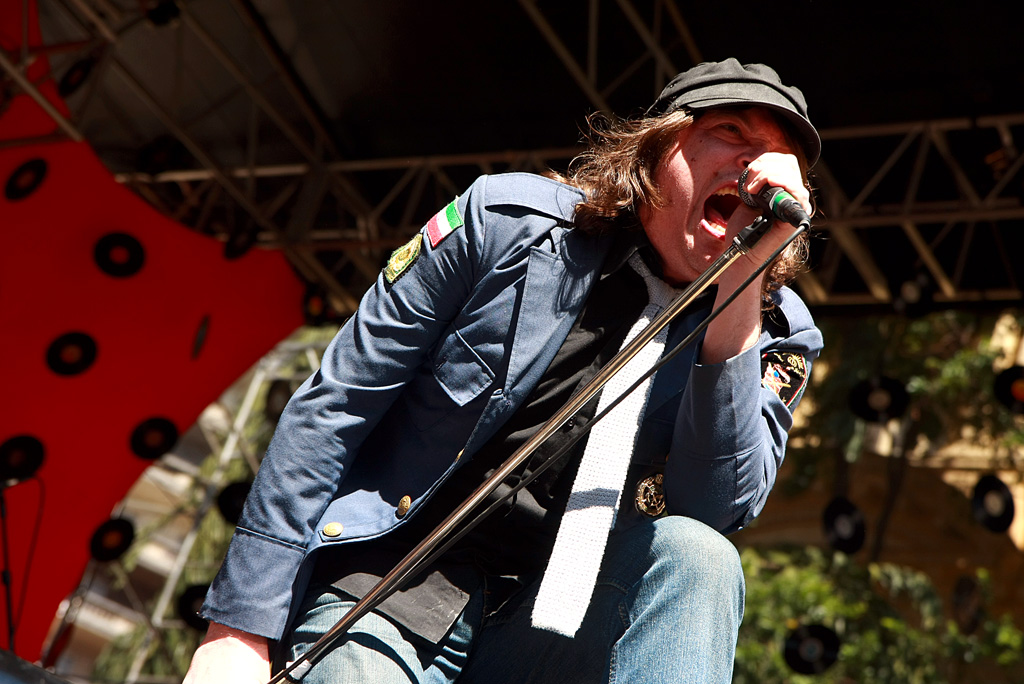 Cachorro Grandeartist
Cachorro Grande was a Brazilian rock band from Porto Alegre, Rio Grande do Sul.
 Lobãoartist
João Luiz Woerdenbag Filho, popularly known as Lobão, is a Brazilian singer-songwriter, composer, multi-instrumentalist, writer, publisher, television host and media personality. He is perhaps best known for his hit songs "Me Chama" and "Vida Louca Vida" as well as seminal works Vida Bandida and A Vida É Doce.
 Los Hermanosartist
Los Hermanos is a rock band from Rio de Janeiro, Brazil. The group was formed in 1997 by Marcelo Camelo, Rodrigo Amarante, Rodrigo Barba (drums), and Bruno Medina. Currently they are on an extended hiatus, performing some concerts sporadically.
 Zé Ramalhoartist
Zé Ramalho is a Brazilian composer and performer. Zé Ramalho has collaborated with various major Brazilian musicians, including Vanusa, Geraldo Azevedo and Alceu Valença.
 Planet Hempartist
Planet Hemp was a Brazilian rap rock band, formed in Rio de Janeiro, Brazil, in 1993, known for starting the career of rappers Marcelo D2 and B Negão for its lyrics supporting the legality of cannabis. The band's original members was Marcelo D2 (vocals), Skunk (vocals), Rafael Crespo (guitars), Formigão (bass) and Bacalhau (drums). The band broke up in 2001 due to differences between the band members, and Marcelo D2 and B Negão are increasing focus on their solo projects. Since 2012 the band reunited and released the album Jardineiros. in June of 2025, the band announced their disbandment and farewell tour.
 Camisa de Vênusartist
Camisa de Vênus was a Brazilian rock group from Bahia whose peak of popularity was in the mid-1980s. Former lead singer, Marcelo Nova would be the producer and partner of Raul Seixas in his last years. The band has made several comebacks for short tours but is now on tour in promotion of its new record “Dançando na Lua”.
 Pato Fuartist
Pato Fu is a Brazilian indie rock band from Belo Horizonte, Minas Gerais. The band was formed by lead singer & rhythm guitarist Fernanda Takai, lead guitarist John Ulhoa, and bassist Ricardo Koctus, in September 1992. Long-time drummer Xande Tamietti left the band in 2014, being replaced by Glauco Nastácia; keyboardist Richard Neves replaced [Lulu Camargo in 2016. The band is also famous for their 2010 album Música de Brinquedo, which was written using only toy instruments. It was at one point included with U2 and Radiohead in a list of the 10 best bands in the world, according to Time magazine.
 Caetano Velosoartist
Caetano Emanuel Viana Teles Veloso is a Brazilian singer-songwriter, musician and political activist. Veloso first became known for his participation in the Brazilian musical movement Tropicália, which encompassed theatre, poetry and music in the 1960s, at the beginning of the Brazilian military dictatorship that took power in 1964. He has remained a constant creative influence and best-selling performing artist and composer ever since. Veloso has won nineteen Brazilian Music Awards, nine Latin Grammy Awards and two Grammy Awards. On 14 November 2012, Veloso was honored as the Latin Recording Academy Person of the Year.
 Erasmo Carlosartist
Erasmo Carlos was a Brazilian singer and songwriter, most closely associated with his friend and longtime collaborator Roberto Carlos. Together, they created many chart hits including "É proibido fumar", "Sentado à beira do caminho", "Além do horizonte", "Amigo" and "Festa de arromba".
 Mamonas Assassinasartist
Mamonas Assassinas was a Brazilian comedy rock band. Known originally as Utopia, their musical style employed a humorous mixture between rock and a wide range of styles, often borrowing elements from other music, among which were the main riff of the Portuguese Vira ("Vira-Vira"), Northeastern Brazilian rhythms like forró, Mexican music, heavy metal, sertanejo, and even pagode. Widely beloved in their native Brazil, the band are widely regarded as one of the most popular bands to come out of the 1990s Brazilian music scene.
 Di Meloartist
Roberto de Melo Santos, known professionally as Di Melo, is a Brazilian singer-songwriter. His albums are characterized by a variety of musical genres, frequently mixing soul and funk elements with psychedelia. He released his first album in 1975, at a time when several members of Brazilian black music started their careers.
 Roberto Carlosartist
 Secos & Molhadosartist