Roots of Derek and the Dominos
The artists and genres Derek and the Dominos came out of — one hop back on the influence tree.
 John Mayall & The Bluesbreakersartist
John Mayall & the Bluesbreakers were an English blues rock band led by multi-instrumentalist, singer and songwriter John Mayall. The band has been influential as an incubator for British rock and blues musicians. Many of the best known bands to come out of Britain in the 1960s and 1970s had members that came through the Bluesbreakers at one time, forming the foundation of British blues music that is still played heavily on classic rock radio. Among those with a tenure in the Bluesbreakers are guitarists Eric Clapton, Peter Green and Mick Taylor, bassists John McVie, Jack Bruce and Tony Reeves, drummers Hughie Flint, Aynsley Dunbar, Mick Fleetwood and Jon Hiseman, and numerous others.
 Delaney & Bonnieartist
Delaney & Bonnie were an American duo of singer-songwriters Delaney Bramlett and Bonnie Bramlett. In 1969 and 1970, they fronted a rock/soul ensemble, Delaney & Bonnie and Friends, whose members at different times included Duane Allman, Gregg Allman, Eric Clapton, George Harrison, Leon Russell, Bobby Whitlock, Dave Mason, Steve Howe, Rita Coolidge, and King Curtis.
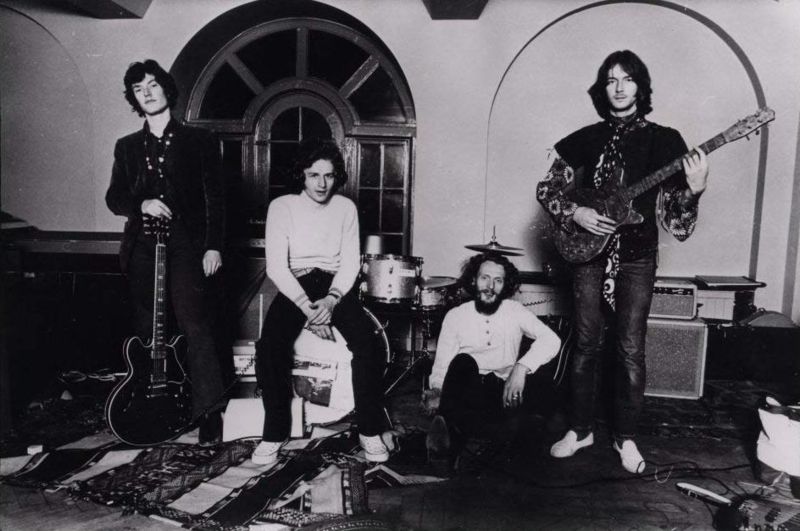 Blind Faithartist
Blind Faith were an English rock supergroup that consisted of Steve Winwood, Eric Clapton, Ginger Baker, and Ric Grech. They followed the success of the members' former bands, including Clapton and Baker's former group Cream and Winwood's former group Traffic, but they split after a few months, producing only one album and a three-month summer tour.
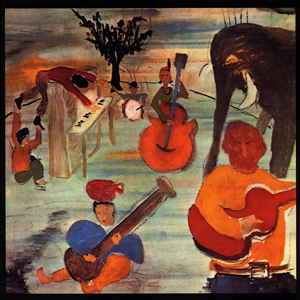 Music from Big Pinkartist
Music from Big Pink is the debut studio album by the Canadian-American rock band the Band. Released on July 1, 1968, by Capitol Records, it employs a distinctive blend of country, rock, folk, classical, R&B, blues, and soul. The album's title refers to a house in West Saugerties, New York called "Big Pink", which was shared by bassist/singer Rick Danko, pianist/singer Richard Manuel and keyboardist Garth Hudson and in which the album's music was partly composed. The album itself was recorded at A & R Recording in New York and Capitol Studios in Los Angeles in early 1968, and followed the band's stint backing Bob Dylan on his 1966 tour and time spent together in upstate New York recording material that was officially released in 1975 as The Basement Tapes, also with Dylan. The cover artwork is a painting by Dylan. In 2000, the album was re-released with additional outtakes from the recording sessions, and in 2018, a "50th Anniversary Super Deluxe" edition was released with a new stereo mix by Bob Clearmountain.
 Chuck Willisartist
Harold "Chuck" Willis was an American blues, rhythm and blues, and rock and roll singer and songwriter. His biggest hits, "C. C. Rider" (1957) and "What Am I Living For" (1958), both reached No. 1 on the Billboard R&B chart. He was known as 'The King of the Stroll' for his performance of the 1950s dance, the Stroll.
 Idlewild Southartist
Idlewild South is the second studio album by American rock band the Allman Brothers Band. With the exception of one song, the album was produced by Tom Dowd and was released on September 23, 1970 in the United States, by Atco Records and Capricorn Records. Following the release of their 1969 debut, the Allman Brothers Band toured the United States extensively to promote the album, which had little commercial success. Their performances, however, did create positive word of mouth exposure that extended to more famous musicians, such as Eric Clapton, who invited group leader Duane Allman to contribute to his 1970 album Layla and Other Assorted Love Songs.
 George Harrisonartist
 Steve Cropperartist
 James Brownartist
 Creamartist
 The Yardbirdsartist
 Dr. Johnartist
 Jimi Hendrixartist
 The Allman Brothers Bandartist
The Allman Brothers Band was an American rock band formed in Jacksonville, Florida, in 1969. Brothers Duane and Gregg Allman founded it with Dickey Betts, Berry Oakley (bass), Butch Trucks (drums), and Jai Johanny "Jaimoe" Johanson (drums). Subsequently based in Macon, Georgia, they incorporated elements of blues, jazz and country music and their live shows featured jam band-style improvisation and instrumentals.
 Freddie Kingartist
 Big Bill Broonzyartist
 Nobody Knows You When You're Down and Outartist
"Nobody Knows You When You're Down and Out" is a blues standard written by pianist Jimmie Cox in 1923 and originally performed in a Vaudeville-blues style in the aftermath of the 1920–1921 U.S. economic depression. A later 1929 recording by Bessie Smith became popular during the early years of the Great Depression due to the lyrics highlighting the fleeting nature of material wealth and the friendships that come and go with it. Since Smith's 1929 recording, the song has been interpreted by numerous musicians in a variety of styles.