Roots of Talk Talk
The artists and genres Talk Talk came out of — one hop back on the influence tree.
 Roxy Musicartist
Roxy Music were an English rock band formed in 1970 by Bryan Ferry and Graham Simpson (bass). By the time the band recorded their first album in early 1972, Ferry and Simpson were joined by Andy Mackay (saxophone/oboe), Phil Manzanera (guitar), Paul Thompson (drums) and Brian Eno (synthesizer). Simpson departed in mid-1972, from which point the bassist position in the band would be unstable, while Eno was replaced by Eddie Jobson (synthesizer/keyboards/violin) in mid-1973. By 1980, the band was reduced to a core trio of Ferry, Mackay and Manzanera, augmented by various backing musicians.
 David Bowieartist
 Slintartist
 Ólafur Arnaldsartist
Ólafur Arnalds is an Icelandic multi-instrumentalist and producer from Mosfellsbær, Iceland. He mixes strings and piano with loops and beats, a sound ranging from ambient/electronic to atmospheric pop. He is also the former drummer for hardcore punk and metal bands Fighting Shit, Celestine, and others.
 Jeff Amentartist
 Pearl Jamartist
Pearl Jam is an American rock band formed in Seattle, Washington, in 1990. One of the key bands in the grunge movement of the early 1990s, Pearl Jam has outsold and outlasted many of its contemporaries and is considered one of the most influential bands from that decade.
 Kate Bushartist
 Tears for Fearsartist
Tears for Fears are an English pop rock band formed in Bath in 1981 by Curt Smith and Roland Orzabal. Founded after the dissolution of their first band, the mod-influenced Graduate, Tears for Fears were associated with the synth-pop bands of the 1980s, and attained international chart success as part of the Second British Invasion.
 Matthew Goodartist
Matthew Frederick Robert Good is a Canadian musician. He was the lead singer and songwriter for the Matthew Good Band, one of the most successful alternative rock bands in Canada during the 1990s and early 2000s. Since the band disbanded in 2002, Good has pursued a solo career and established himself as a political commentator and mental health activist. Between 1996 and 2016, with sales by Matthew Good Band included, Good was the 25th best-selling Canadian artist in Canada. Good has been nominated for 21 Juno Awards during his career, winning four.
 Radioheadartist
 Dovesartist
 Shearwaterartist
 M83artist
 Bark Psychosisartist
 The Notwistartist
The Notwist are a German indie rock band. Formed in 1989, the band moved through several musical incarnations, despite maintaining a relatively stable line-up. While their early records moved through heavy metal into dark indie rock, their recent efforts for which they have received the most attention have been strongly influenced by the electronica scene, along with other groups on the record label Morr Music.
 The Mars Voltaartist
 Steven Wilsonartist
 Porcupine Treeartist
 Storm Corrosionartist
 Verve Recordsartist
Verve Records is an American record label owned by Universal Music Group (UMG). Founded in 1956 by Norman Granz, the label is home to the world's largest jazz catalogue, which includes recordings by Ella Fitzgerald, Cal Tjader, Nina Simone, Stan Getz, Bill Evans, Billie Holiday, Oscar Peterson, Jon Batiste, and Diana Krall, among other notable artists, as well as a diverse mix of recordings that fall outside the jazz category, with albums from such disparate artists as the Velvet Underground, Kurt Vile, Arooj Aftab, Frank Zappa and the Mothers of Invention, and many more. It absorbed the catalogues of Granz's earlier label, Clef Records, founded in 1946; Norgran Records, founded in 1953; and material which was previously licensed to Mercury Records.
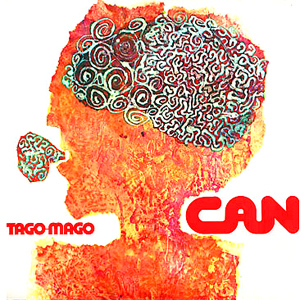 Tago Magoartist
Tago Mago is a 1971 album by the German krautrock band Can, released in August as a double LP by United Artists Records. It was the band's first full album to include vocalist Damo Suzuki after the departure of Malcolm Mooney the year prior, though Suzuki had appeared on most tracks on the 1970 compilation album Soundtracks. Tago Mago was recorded between November 1970 and February 1971 at the Can Studio in the Schloss Nörvenich, a medieval castle near Cologne. It was the band's third album release, including the 1970 compilation album, Soundtracks, though regarded by the band as their second. Their debut album was Monster Movie (1969).