Roots of The Flaming Lips
The artists and genres The Flaming Lips came out of — one hop back on the influence tree.
 The Postal Serviceartist
The Postal Service was an American indie pop group from Seattle, Washington, consisting of singer Ben Gibbard, producer Jimmy Tamborello, and Jenny Lewis on background vocals.
 Sickoartist
 Letters to Cleoartist
Letters to Cleo is an American alternative rock band originating from Boston, Massachusetts, best known for the 1994 single, "Here & Now", from their full-length debut album, Aurora Gory Alice which topped the Billboard Modern Rock Tracks chart and peaked at 56 on the Billboard Hot 100. The band's members are Kay Hanley, Greg McKenna, Michael Eisenstein, Stacy Jones, Scott Riebling, and later, Tom Polce and Joe Klompus.
 Kacey Musgravesartist
 Rock Cityartist
Christopher Branford Bell was an American musician and singer-songwriter. Along with Alex Chilton, he led the power pop band Big Star through its first album #1 Record (1972). He also pursued a solo career throughout the mid-1970s, resulting in the posthumous I Am the Cosmos LP.
 Kormacartist
Cormac O'Halloran, better known by his stage name DJ Kormac or simply Kormac, is a Dublin-based composer, DJ, and producer renowned for blending organic recordings with expansive electronica. His work spans solo projects, collaborative releases, and film scoring, where he is celebrated for his innovative soundscapes.
 Morning Teleportationartist
Morning Teleportation is an American psychedelic rock band formed in 2005 when Bowling Green, Kentucky, United States, natives Travis Goodwin (keyboards), Tres Coker (drums), and Paul Wilkerson (bass) met up with Chicago transplant Tiger Merritt (vocals/guitar), who had just moved to their hometown for college. They played at Electric Forest Festival, Bonnaroo Music Festival, and Sasquatch! Music Festival and supported The Flaming Lips, Cage The Elephant, Primus and Modest Mouse.
 Cakeartist
 Gene Kellyartist
 Neil Youngartist
 Red Hot Chili Peppersartist
 Candleboxartist
Candlebox is an American rock band from Seattle, Washington. Since its formation in 1990, the group has released eight studio albums, several charting singles, a compilation, and a CD+DVD.
 Sean Lennonartist
 Mark Linkousartist
 Daniel Johnstonartist
 De La Soulartist
 Karen Oartist
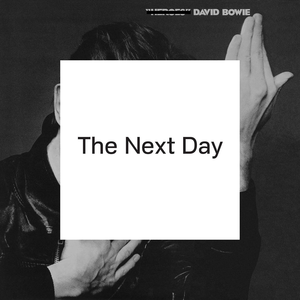 The Next Dayartist
The Next Day is the twenty-fifth studio album by the English musician David Bowie. Released in March 2013, it was Bowie's first studio release in ten years, as he had retreated from public view after undergoing a procedure to treat a blocked heart artery in 2004. Co-produced by Bowie and Tony Visconti, the album was recorded in New York City between May 2011 and October 2012. It featured contributions from session musicians, some of whom he had worked with in the past, including Gerry Leonard, Earl Slick, Gail Ann Dorsey, Steve Elson, Sterling Campbell and Zachary Alford. Recording took place in secret; all personnel involved signed non-disclosure agreements.
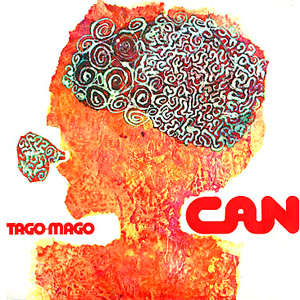 Tago Magoartist
Tago Mago is a 1971 album by the German krautrock band Can, released in August as a double LP by United Artists Records. It was the band's first full album to include vocalist Damo Suzuki after the departure of Malcolm Mooney the year prior, though Suzuki had appeared on most tracks on the 1970 compilation album Soundtracks. Tago Mago was recorded between November 1970 and February 1971 at the Can Studio in the Schloss Nörvenich, a medieval castle near Cologne. It was the band's third album release, including the 1970 compilation album, Soundtracks, though regarded by the band as their second. Their debut album was Monster Movie (1969).
 Lucifer Samartist
 moe.artist
 The Chameleonsartist
The Chameleons are an English rock band formed in Middleton, Greater Manchester, in 1981. The band's classic line-up consisted of bassist and vocalist Mark Burgess, guitarists Reginald Smithies and Dave Fielding and drummer John Lever.
 Clinicartist
 Red Right Handartist
"Red Right Hand" is a song by the Australian rock band Nick Cave and the Bad Seeds. It was released as a single from their eighth studio album Let Love In (1994) on 24 October 1994 by Mute Records. An edited version was included on the single, while the longer version was included on the album. The title comes from John Milton's epic poem Paradise Lost (1667), in which it refers to the vengeful hand of God.